



If you are entering the stretch film production business for the first time, the technical landscape can feel a little overwhelming. There are multiple machine types, various automation levels, different width options, and varying layer configurations to consider. However, once you understand the core technology behind a stretch film machine and how each component contributes to the finished product, the decision becomes far more manageable. This article breaks down the key technology in plain, practical terms.
How a Stretch Film Machine Works
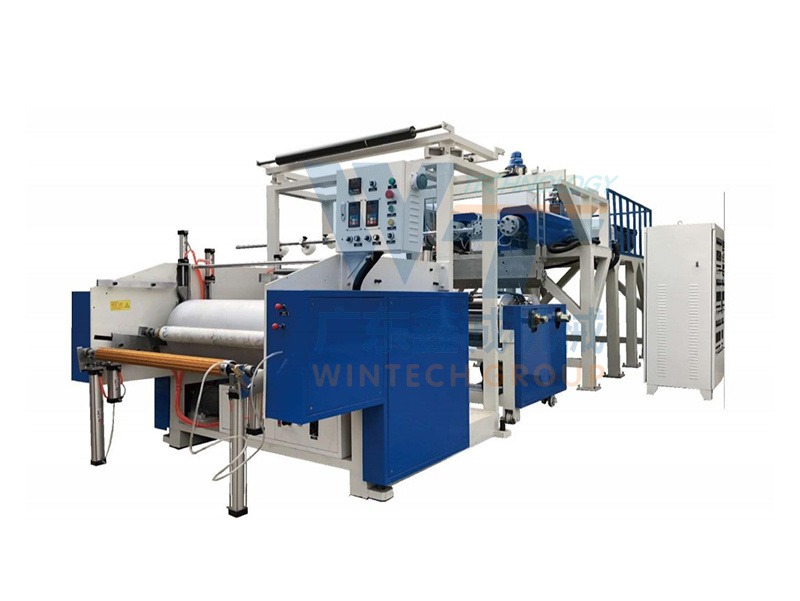
At its most basic level, a stretch film machine melts polyethylene resin pellets and pushes the molten material through a flat die head to form a thin, wide sheet of film. This process is known as cast extrusion. The molten film then passes over a series of chilled rolls that cool it rapidly and set its properties. After cooling, the film is wound onto cores to form finished rolls.
The quality of the finished film depends on many variables throughout this process, including melt temperature consistency, screw design, die head uniformity, cooling roll temperature, and winding tension. A well-engineered machine controls all of these variables precisely, which is what separates professional-grade equipment from cheaper alternatives.
The Extrusion Screw and Its Critical Role
The extrusion screw sits inside a barrel and rotates to melt, mix, and push the resin forward. In a quality stretch film machine, the screw is made from high-grade alloy and goes through nitrogen surface treatment. This treatment significantly increases the hardness of the screw surface, making it more resistant to wear from abrasive fillers and long-term friction.
A worn screw produces inconsistent melt quality, which leads to film thickness variations, gel defects, and increased material waste. Therefore, the quality of the screw and its treatment process is one of the most important indicators of a machine’s long-term performance and reliability. Always ask about screw material and surface treatment when evaluating options.
Understanding the Die Head and Film Width
The die head is the component that shapes the molten resin into a flat, wide film. Its internal geometry must distribute the melt uniformly across the entire width to produce film with consistent thickness from edge to edge. Uneven melt distribution results in film with thick and thin sections, which affects winding quality and performance during application.
Die heads are engineered for specific width ranges. Common widths for a stretch film machine include 1250mm, 1850mm, and 2400mm. The wider the die head, the more film surface area you produce per unit of time, which increases overall output capacity.
Cooling and Casting Rolls
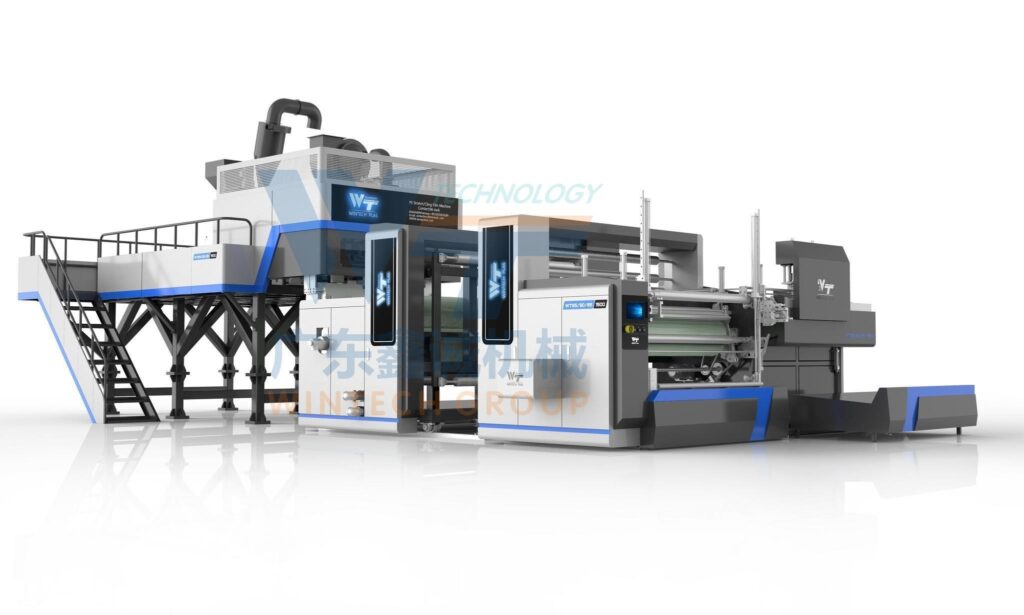
After the melt exits the die head, it lands on the first chilled casting roll. The temperature of this roll, as well as the subsequent chill rolls, determines many of the film’s physical properties, including its clarity, tensile strength, and elongation at break. Precise temperature control of the casting and chill roll system is therefore essential for consistent film quality.
Why Consistent Cooling Matters
If the cooling is uneven across the film width, different areas of the film will have different properties. This creates problems during winding, where tension variations can cause roll defects, and during application, where the film may not stretch or cling uniformly. A well-designed cooling system maintains extremely tight temperature tolerances across the full film width throughout the production run.
Winding Systems and Roll Quality
The winding system takes the finished film and winds it onto cores to form customer-ready rolls. The tension applied during winding must be consistent to produce tight, well-formed rolls. A stretch film making machine with an advanced winding system uses surface winding, center winding, or a combination of both to achieve the right roll hardness and edge quality for different film types.
More advanced machines use turret winding systems with multiple shafts, allowing roll changes to happen automatically without stopping the line. This is particularly valuable on high-speed lines where any downtime represents a meaningful loss of output.
Conclusion
Understanding stretch film machine technology gives you a genuine advantage when evaluating suppliers and comparing options. Focus on screw quality, die head design, cooling system precision, and winding technology. These are the components that determine whether your finished film will be consistent, competitive, and profitable day after day. A machine built with quality in every component is always the smarter long-term choice.